- Apr 30
What Christ Sees That No One Else Can
- Ernest H. Benjamin
Revelation 2:1–4 | Sunday Renewal Podcast, Episode 71
There is a medical condition called takotsubo cardiomyopathy. Doctors call it broken heart syndrome.
The arteries are clear. The structure is sound. No blockages. From the outside, the patient looks fine...steady pulse, normal rhythm, no visible distress. But inside, the heart muscle is weakening. And if it goes undetected long enough, it will be fatal.
That is also a picture of what can happen to a soul.
You can show up. Serve faithfully. And still be failing on the inside...slowly, quietly, in ways that no one around you can measure. Not even you, at first.
That is precisely the condition Christ diagnoses in His message to the church in Ephesus in Revelation 2:1–4. It is a sobering passage, not because the church was filled with rebels or hypocrites, but because they were so faithful. And that faithfulness made the diagnosis all the more devastating.
Christ Is Walking Through the Room
Before Christ says a single word about this church's performance, He establishes His identity. He is "Him who holds the seven stars in his right hand, who walks among the seven golden lampstands" (Rev. 2:1).
The seven lampstands are the seven churches. And Christ is not reviewing their condition from a distance. He is walking among them. He sees the faces. He hears the prayers. He knows who is singing from their heart and who is just moving their lips.
This is not a distant audit. This is an intimate, sovereign presence.
His walking among the lampstands is a comfort to those who love Him and a confrontation to those who have drifted. Before He evaluates anything, He wants the church in Ephesus to know: I am here. I am sovereign. And I see everything.
He sees what no one else can see.

The Commendation That Makes the Rebuke Devastating
Christ begins not with accusation, but with commendation. And He is generous with it.
"I know your works, your toil and your patient endurance, and how you cannot bear with those who are evil, but have tested those who call themselves apostles and are not, and found them to be false. I know you are enduring patiently and bearing up for my name's sake, and you have not grown weary." (Rev. 2:2–3)
Three escalating words...works, toil, endurance. Not casual service. Bone-deep labor. Years of holding firm under real pressure. False teachers had come in with credentials and confidence, and the Ephesians put them on trial. They tested them. They found them wanting. They protected the flock.
In a city where religious pluralism was not just tolerated but expected, where Artemis demanded devotion and Rome demanded worship, this church refused to bend. They endured for Christ's name. They did not quit.
By any external measure, this is a model church. Hard-working. Unshakeably committed. Doctrinally sound. Willing to suffer.
And then comes the word that changes everything.
But.
The One Thing Christ Has Against Them
"But I have this against you, that you have abandoned the love you had at first." (Rev. 2:4)
Not "I have a concern." Not "I have a suggestion." I have this against you.
The sovereign Lord who holds the stars in His right hand and walks among the lampstands has looked past everything they have done and indicted the one thing they have lost. Their love.
And notice the word: abandoned. Not lost. Not misplaced. Abandoned. It is an act of the will. They did not stumble out of it. They walked away from it. Somewhere in the middle of all their faithfulness, they stopped loving the One they were being faithful to.
Isaiah named this pattern centuries earlier: "These people draw near to me with their mouth and honor me with their lips, but their hearts are far from me." (Isa. 29:13)
Outward obedience. Inward emptiness.
The Ephesian church had become a church that honored Christ with their hands but had hearts that were far from Him. And Christ was not content with their performance. He wanted their love.

Faithful Roommates
Think about a marriage. In the early years, every act of service was fueled by something deeper than obligation; it was fueled by delight. But slowly, without any single explosion or betrayal, life filled in the space that love used to occupy. Jobs, bills, children, responsibilities. The calendar grew heavier. The conversations grew shorter. And one day, neither of them could say exactly when, the love that once drove everything faded into routine.
Twenty years in, he has never missed an anniversary. He provides. He shows up. The bills are paid. But sit them down at the dinner table. The food is there. The routine is intact. But the tenderness is gone. The laughter has dried up. They have become faithful roommates instead of devoted lovers.
He has not left the marriage. He has left the love.
That is the Ephesian church. That is many of us.
We did not walk away from Christ. We just got so busy for Him that we stopped being close to Him. We were doing all the right things and missing the most important thing... a heart that still burned for the One we serve.
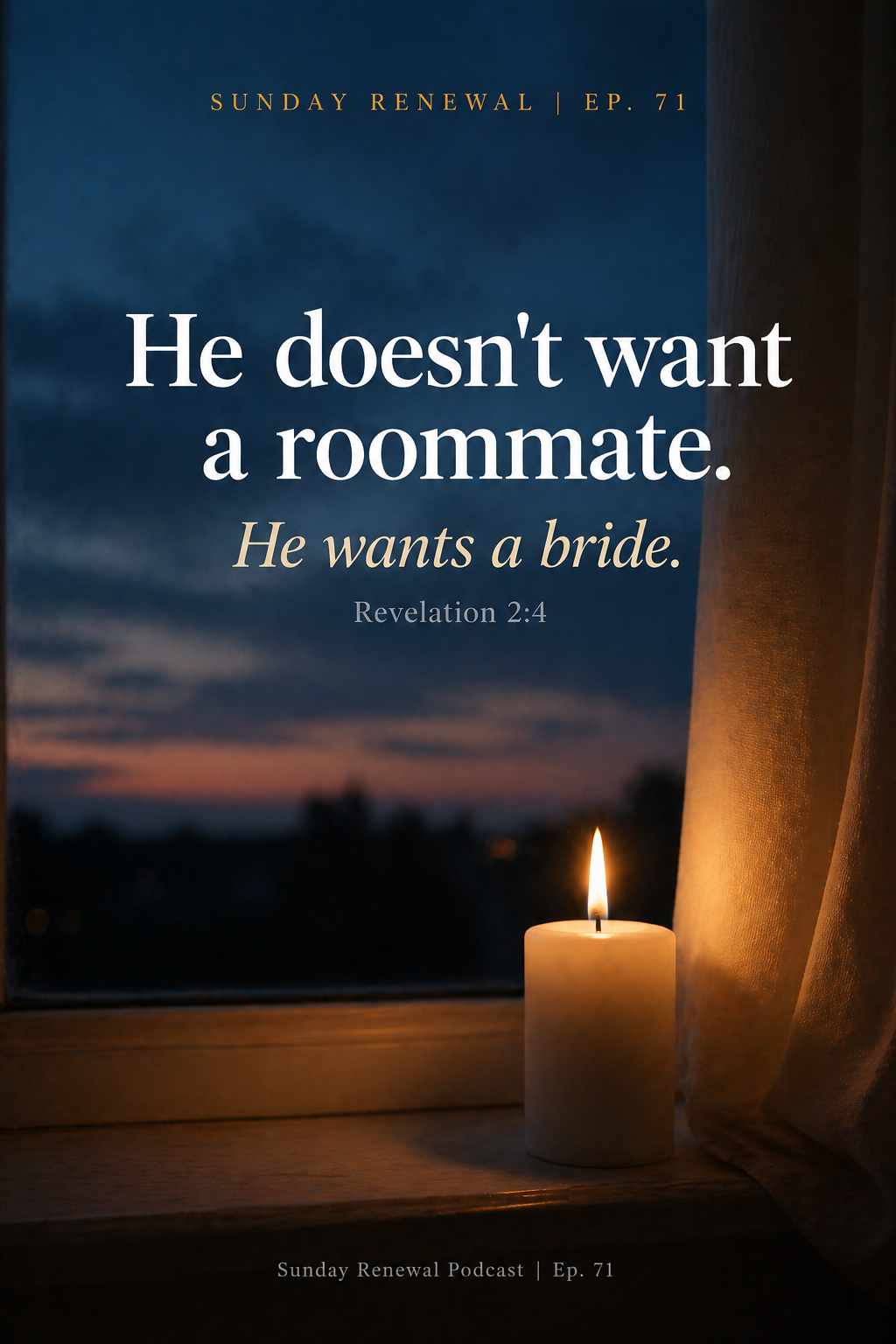
Christ, the One who walks among the lampstands, was not content with their service. He did not want a roommate. He wanted a bride.
God Has Always Evaluated the Heart
This is not a New Testament novelty. God established this standard long before Revelation was written.
When Samuel went to anoint the next king of Israel and saw Jesse's impressive oldest son, God stopped him: "The Lord sees not as man sees: man looks on the outward appearance, but the Lord looks on the heart." (1 Sam. 16:7)
Paul drives this to its most uncomfortable conclusion in 1 Corinthians 13. If you speak with the tongues of angels, if you have mountain-moving faith, if you give everything you own... without love, you are nothing. You gain nothing. Not reduced. Not diminished. Nothing.
That is the standard Christ applies to Ephesus. And it is the standard He applies to us.
He is not counting your labor. He is weighing your love.
A Question Worth Sitting With
The most searching part of this message is what it means for those of us who lead — parents, elders, teachers, ministry workers. Because leadership can mask a cold heart longer than almost anything else. You stay busy. You stay needed. You stay productive. And the busyness becomes a substitute for love rather than an expression of it. No one questions the leader who is producing. But Christ is not just evaluating your output. He is evaluating your heart.
Before Christ gives the Ephesian church the command to return, He gives them the diagnosis. He doesn't offer a solution until they have honestly faced the problem.
And the diagnosis is simple:
You can be right and still be wrong. You can be faithful and still be far away. You can honor Christ with your hands and have a heart that is far from Him.
The question is not, Are you doing enough?
The question is, what is driving what you do?

Before the Command Comes the Mirror
Christ is precise in His method here. He does not offer the Ephesian church a solution before they have sat with the problem. The command to return is coming, but He will not give it until they have looked honestly at where they are.
That is where this message lands. Not with a resolution. With a mirror.
David, the man God chose because of his heart, still had to pray this at the end of his life: "Search me, O God, and know my heart. Try me and know my thoughts, and see if there be any grievous way in me." (Psalm 139:23–24)
That prayer is the door this sermon leaves open.
The One who walks among His churches is walking through this moment too. And He is not asking about your attendance, your service record, or your doctrinal positions.
He is asking something quieter than all of that.
And somewhere in you, you already know what it is.
If this message stirred something in your heart, listen to the full episode — Episode 71: What Christ Sees That No One Else Can on Sunday Renewal. Available wherever you listen to podcasts.
Share this with someone who needs to hear it today.
Love This Content? Help Us Share More Hope & Faith! 💛
Join Me Weekly:
Subscribe to my blog for fresh devotionals that bring God’s Word to life, listen to the weekly podcast, or follow me: