- Jun 10
Most Christians Get This Wrong About Enjoying Life
- Ernest H. Benjamin
7 Biblical Patterns from Ecclesiastes | Sunday Renewal Ep. 77
Guest message by Hiram Kemp | Hosted by Ernest H. Benjamin
There's a tension most Christians feel but rarely name out loud.
On one side, the world is pulling, loud, shiny, promising that real happiness is somewhere just outside the boundaries of faith. On the other side, there's a quiet religious voice that says the most spiritual thing you can do is put your head down, avoid the mess, and just wait for heaven.
And somewhere between those two extremes, a lot of believers are quietly exhausted. Not because they're sinning. But because they've never been given permission to actually enjoy the life God gave them.
In Episode 77 of Sunday Renewal, my dear friend and brother in Christ, Hiram Kemp, steps in to preach a message that might change the way you think about everything: your work, your dinner table, your friendships, your season of life.
And the book of the Bible he preaches from? You might not expect it.
"You can love God, love righteousness, keep your eyes on the world to come and still enjoy God's world, God's way." — Hiram Kemp
The Two Extremes That Quietly Cheat You
Most people approach life and faith through one of two lenses.
The first says: If I really want to enjoy life, I have to run as far from God as I can. Spirituality feels like a cage. Pleasure is somewhere on the other side of obedience. So you chase whatever feels good and figure you'll deal with God later or not at all.
The second looks more righteous, but it's equally dangerous: This world is dark. People are wicked. The most spiritual thing I can do is retreat, read my Bible, attend services, and wait for Jesus to come back.
One looks like freedom. The other looks like holiness. Hiram names them both clearly in this message: full-on worldliness and the monastery approach.
And he says, gently but firmly, both of them are wrong.
Both dishonor God. Both cheapen your existence. And the Bible offers a better way, a third way that most people miss entirely.

The Surprise Book That Teaches It
Here's the twist: the book of the Bible Hiram preaches this from is Ecclesiastes, a book most people associate with drudgery, darkness, and Solomon's famous refrain, "Vanity of vanities, all is vanity."
But Hiram reframes that word vanity in a way that is quietly life-giving.
Vanity in Ecclesiastes doesn't mean meaningless. It doesn't mean nothing matters. The Hebrew idea is closer to brief, quickly passing, like a vapor. Solomon isn't saying life is empty. He's saying life is short.
And a short life, received well, can be a deeply enjoyed one.
Throughout Ecclesiastes, Solomon punctuates the hard truths about life with what Hiram calls joy statements, invitations to actually enjoy the world you're living in, right now, as a gift from the hand of God.
Here are the seven patterns he walks through.
Pattern 1: Enjoy Your Work
Ecclesiastes 2:24 | 3:13 | 5:18 | 9:10
"There is nothing better for a person than that he should eat and drink and find enjoyment in his toil. This also, I saw, is from the hand of God." — Ecclesiastes 2:24
A lot of people believe work is a consequence of the fall, something to endure until retirement or eternity. But Hiram pushes back on that with Genesis.
Before sin ever entered the world, God gave Adam the responsibility to dress and keep the garden (Genesis 2:15). Work was always dignifying. Sin changed our relationship to work, but it never made work evil.
"If a man doesn't work, neither will he enjoy."
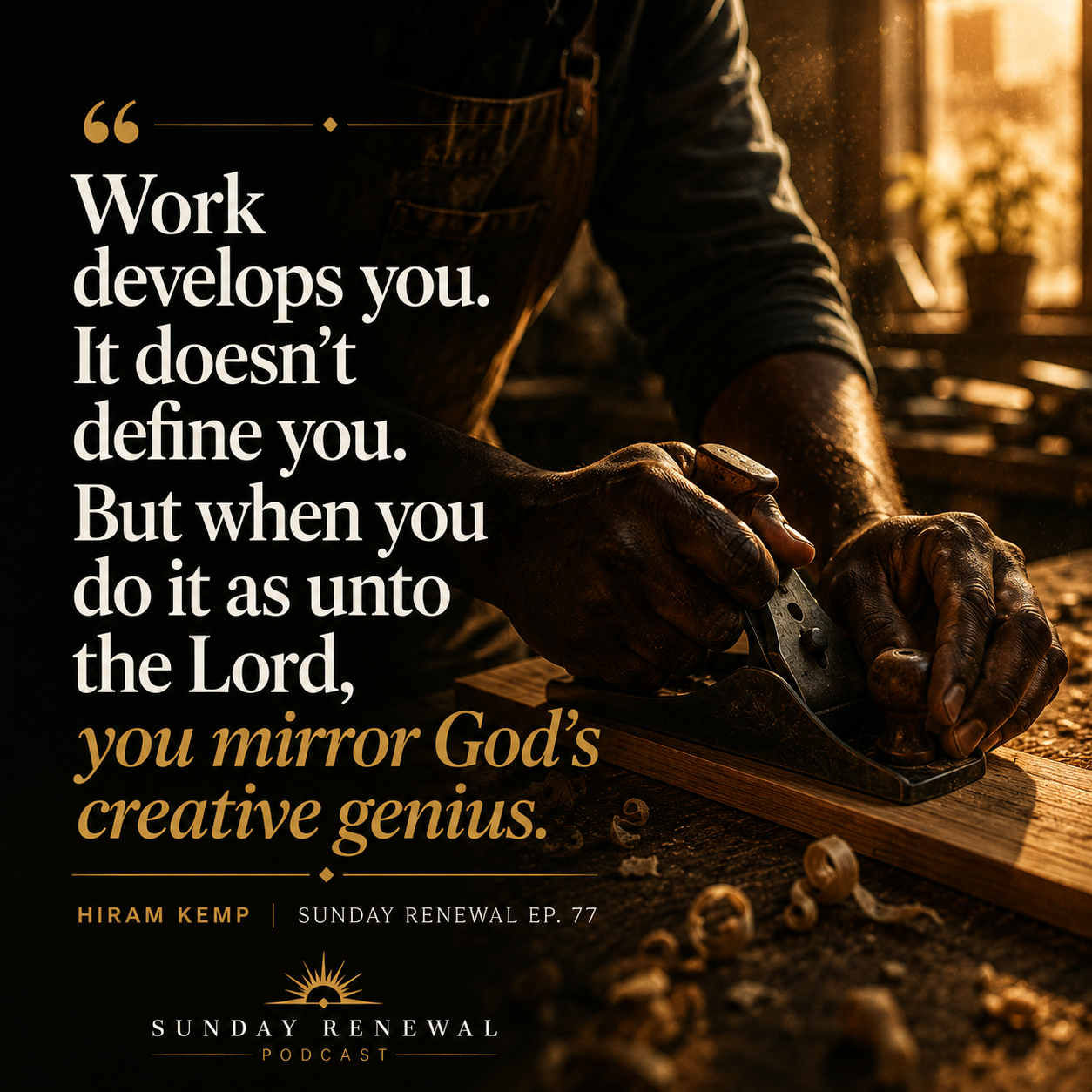
The shift Hiram calls for isn't finding a better job. It's finding a better posture, seeing your work, whatever it is, as a craft. As a contribution. As something that mirrors the creative work of God himself.
God doesn't honor white collar over blue collar. He doesn't care if you clean toilets or try cases. The question isn't what you do for a living. It's how.
"Whatever you do, work heartily as to the Lord and not unto men." (Colossians 3:23)
When you start to see your work as developing you without defining you, there's a blessing in the rigor you never found before.
Pattern 2: Enjoy Your Food and Drink
Ecclesiastes 8:15 | 9:7
"Go, eat your bread with joy, and drink your wine with a merry heart, for God has already approved what you do." — Ecclesiastes 9:7
This one might feel too simple. Too small. You might be thinking: I'm in a season of real suffering, and you're telling me to enjoy a meal?
Hiram addresses this directly. Solomon isn't saying food and drink remove hardship. He's saying they sustain you in it.
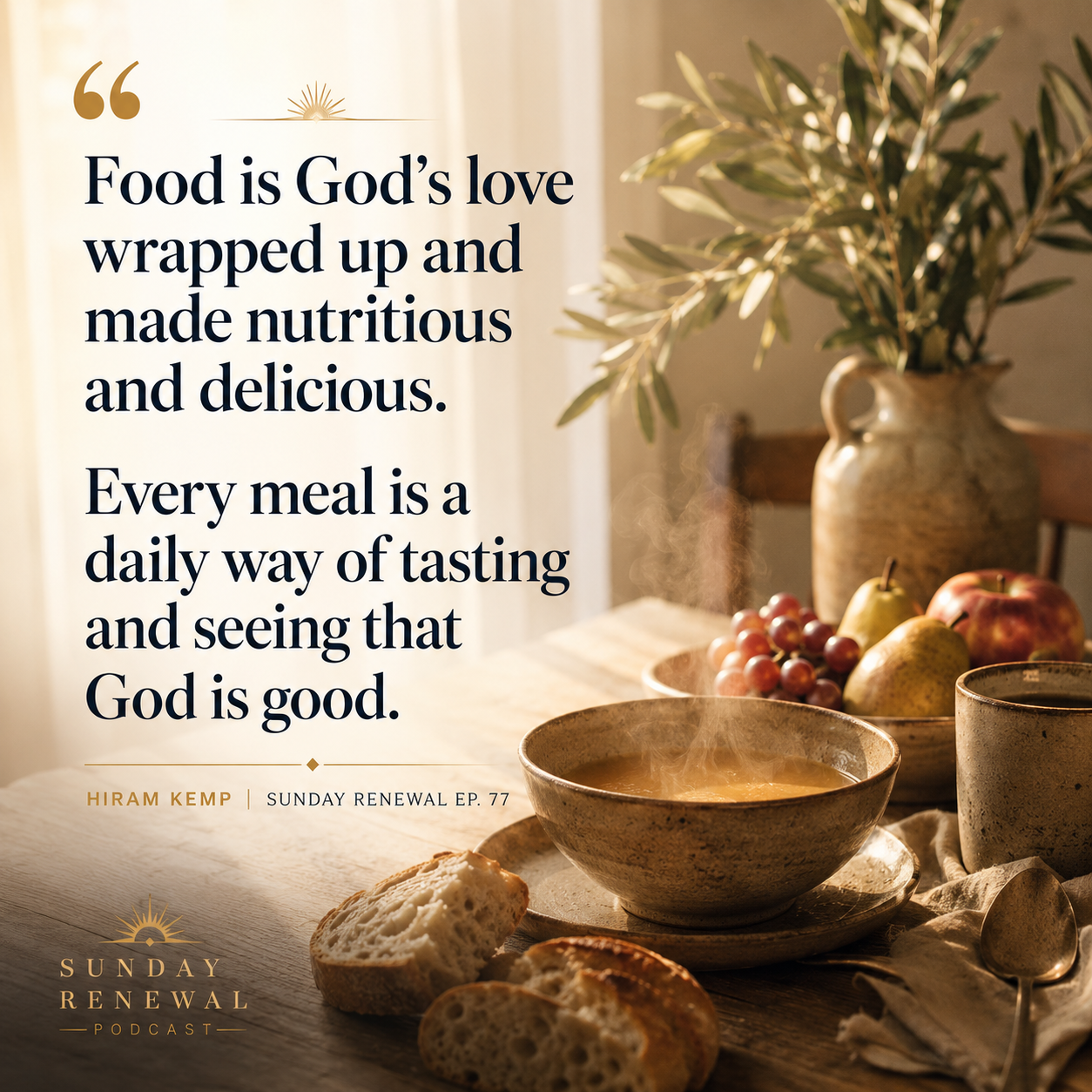
Every meal is a daily way of tasting and seeing that God is good (Psalm 34:8). It's God communicating, through something as ordinary as a warm plate of food and a cold glass of water, that life is a gift, and life is good.
Bobby Jamieson, in his book on Ecclesiastes, puts it this way: "Food is God's love wrapped up and made nutritious and delicious."
Jesus came eating and drinking (Matthew 11:19). His first miracle was at a dinner party. He broke bread with his disciples, commemorated his death with a meal, and cooked breakfast for his friends after the resurrection.
Beware of trying to be more spiritual than God. You will always fail.
Meals are designed to slow us down. To pause us. To let us taste and see that the God who runs the universe wants your life not just to continue, but to flourish.
Pattern 3: Accept Your Portion
Ecclesiastes 9:9 | Psalm 118:24 | Hebrews 13:5
Three times in Ecclesiastes, Solomon uses the language of portion and lot, the same language used in the Old Testament when the tribes of Israel received their allotments of land.
But here Solomon isn't talking about real estate. He's talking about your life, your actual, current, this-moment life.
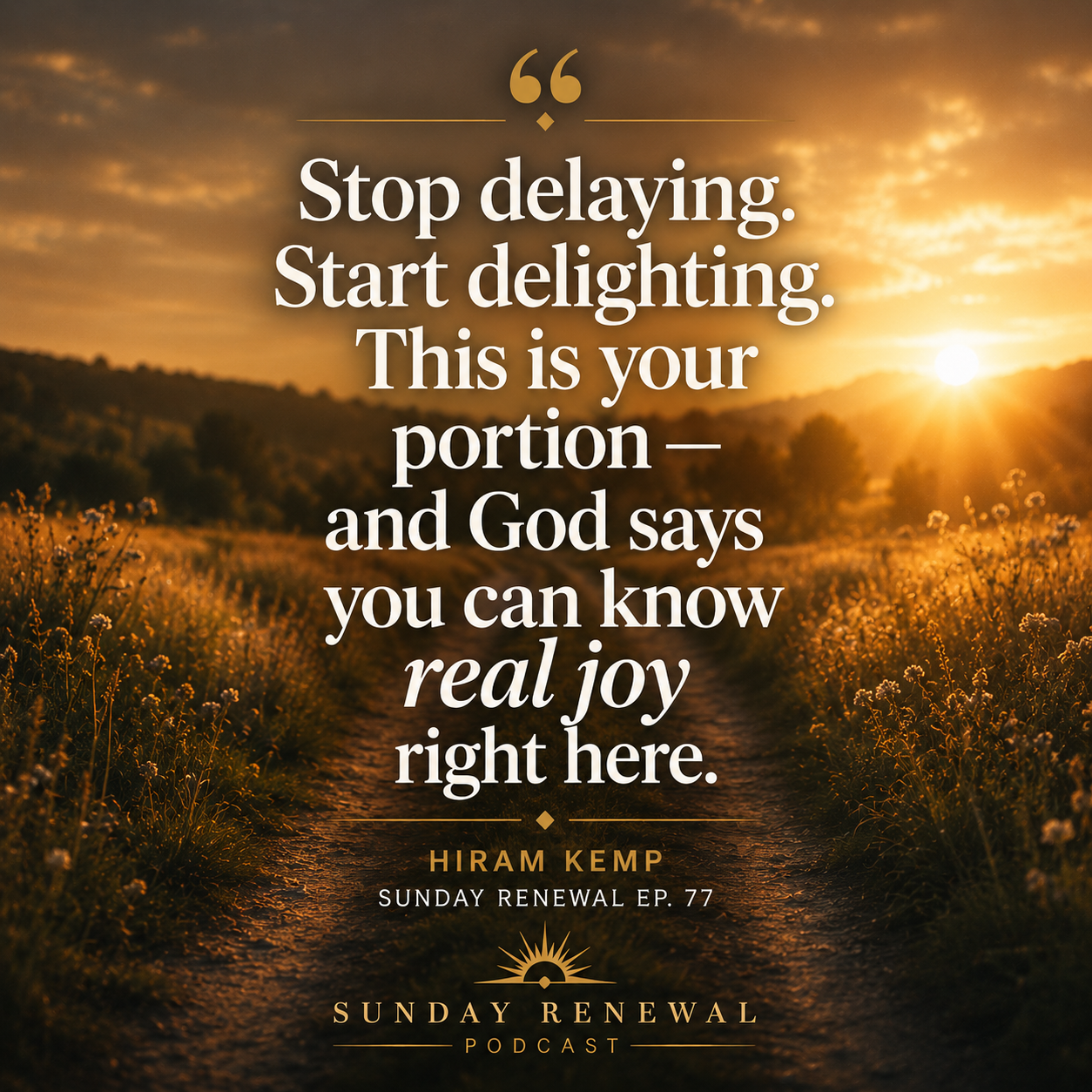
And the invitation is searingly simple: Stop delaying. Start delighting.
"This is the day that the LORD has made. I will rejoice and be glad in it." — Psalm 118:24
Hiram says it this way: "This is about stopping the lusting for the life you don't have and starting to love the one you do."
Social media, he notes, is not the devil, but it may be the sharpest tool against this particular discipline. It constantly invites you to peer into someone else's portion. Someone else's season. Someone else's meal, marriage, ministry, and momentum.
And the moment you do, your own life, which just a minute ago felt genuinely good, suddenly feels small.
"A sound heart is the life of the flesh. But envy is the rottenness of the bones." — Proverbs 14:30
Your portion is what came out of the kitchen. You might want more. You might wish it were different. You can even order more later. But this is what's in front of you right now.
And God is saying: you can know joy here, if you simply accept it.
Pattern 4: Enjoy Your Relationships
Ecclesiastes 4:9–12 | 9:9
"Two are better than one, because they have a good reward for their toil. For if they fall, one will lift up his fellow." — Ecclesiastes 4:9–10
Hiram cuts off the lone wolf approach to life with a simple observation about Jesus.
Jesus came to this world to die for the sins of humanity, a task he would ultimately have to face alone. Nobody could stand in for him. And yet, in four inspired biographies, he makes twelve close friends. He eats with them. Laughs with them. Mourns with them. Prays with them.
Why?
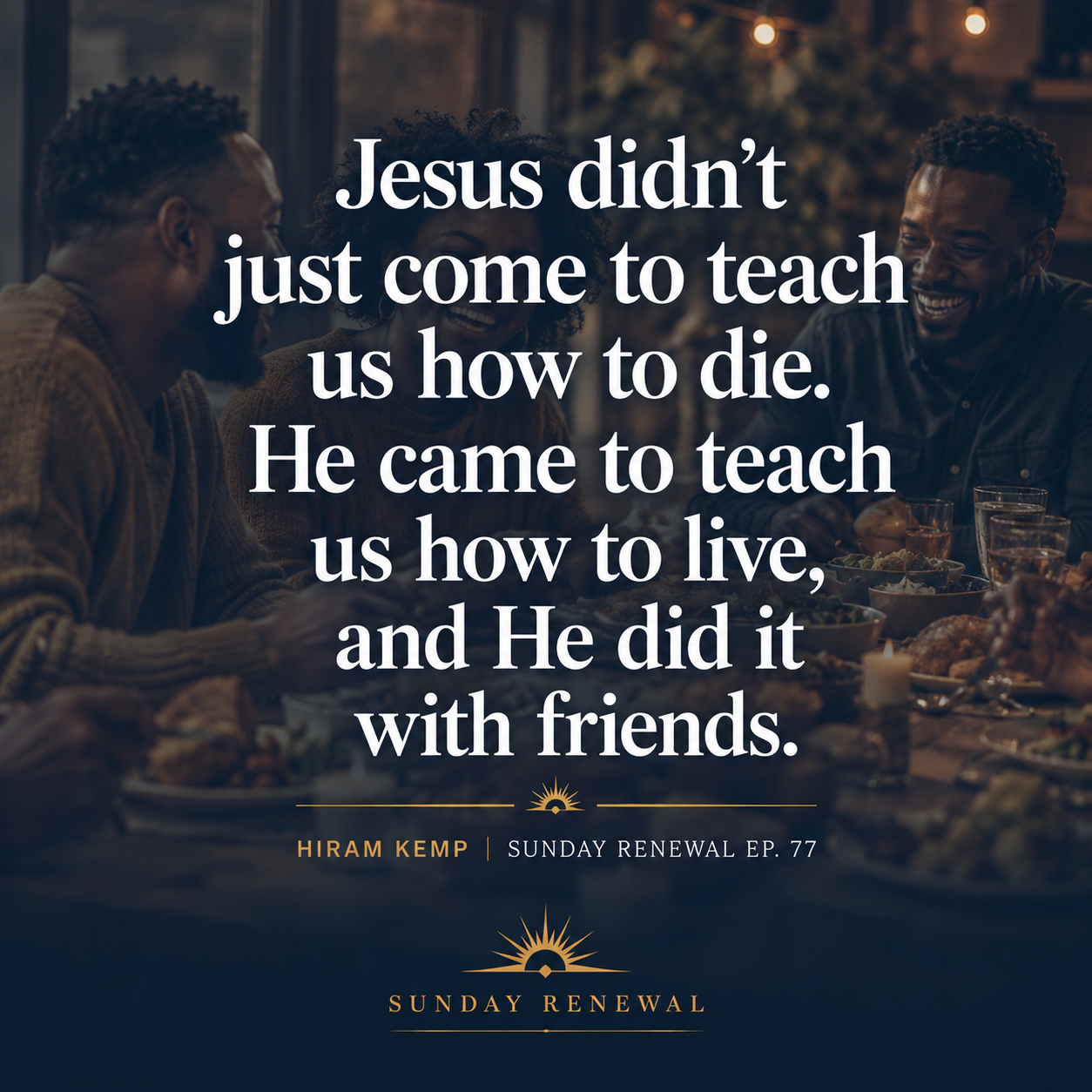
Because Jesus didn't just come to teach us how to die. He came to teach us how to live.
"How many times do we think we're better than Jesus? How many times do we say, 'I'm just here to do my business, and I'm getting out'?"
The gospel was never designed to make you a spiritual island. It was designed to bring you into community, into marriage, friendship, and fellowship, because a real human relationship is one of the primary ways we enjoy God's world.
Love your spouse as the Scriptures call you to (Ephesians 5:22–25). Invest richly in friendships, because a friend loves at all times, and a brother is born for adversity (Proverbs 17:17). Open your hands and your table.
Joy multiplies in community. Grief is halved in it.
Pattern 5: Trust the Seasons
Ecclesiastes 3:1–13
"To everything there is a season, and a time for every purpose under heaven." — Ecclesiastes 3:1
This is the most famous passage in Ecclesiastes, the one that ends up on greeting cards and gallery walls. But Hiram treats it with more weight than a platitude.
In verse 11, Solomon says God has put eternity in our hearts. And the way he prepares us for eternity, says Hiram, is by training us through time, teaching us to embrace our limits, to trust his timing, and to ride the rhythms of a life that is not in our control.
There's a line from the series finale of The Office that Hiram calls both "helpful and haunting." Andy Bernard says, "I wish there was a way to know you're in the good old days before you've actually left them."
Solomon would say: you're in them. Right now. These are the good old days.
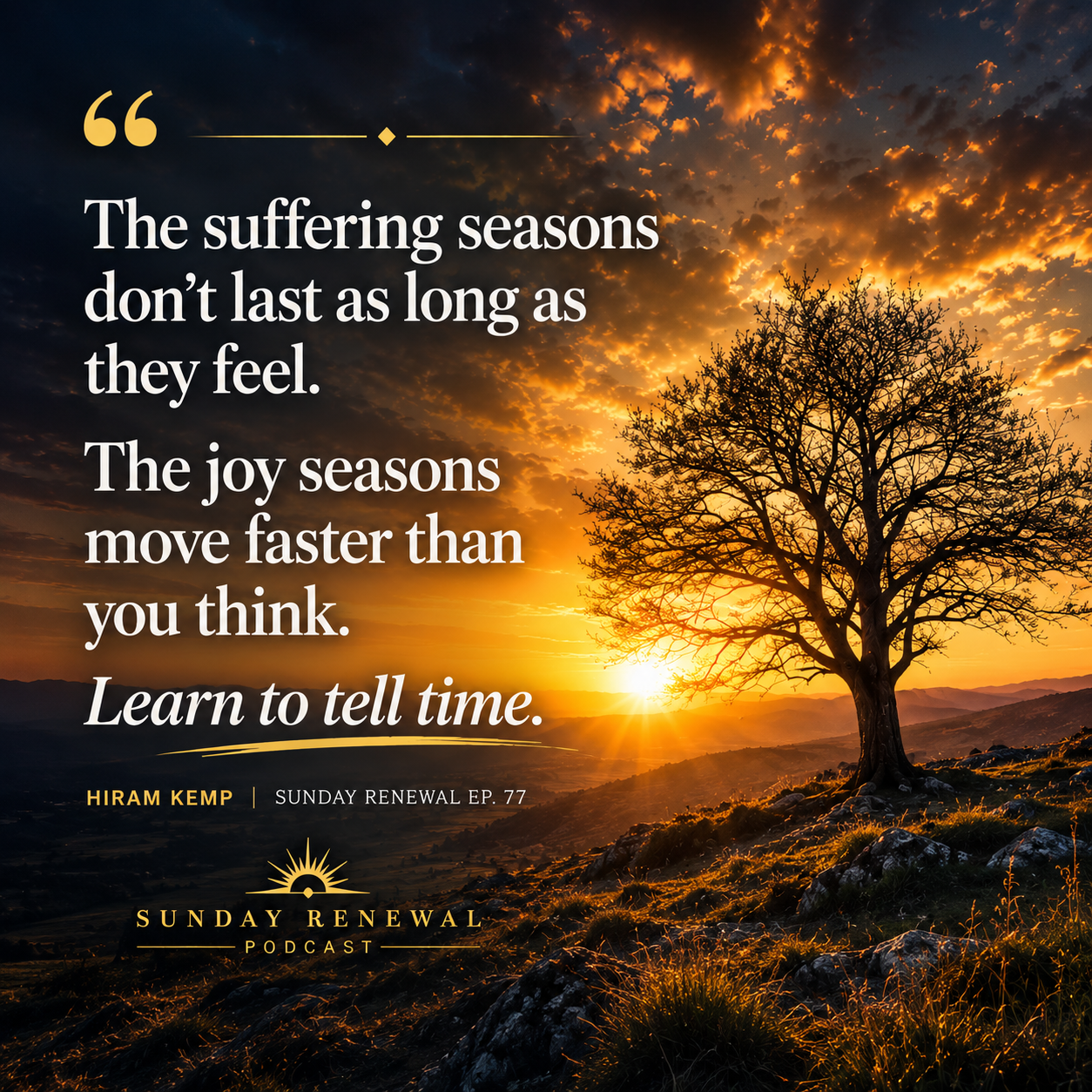
The suffering seasons don't last as long as they feel. The joyful seasons move faster than you think. The discipline God is calling you to is this: learn to tell time.
If you're in a hard season right now, weeping, mourning, waiting, look at the other side of Ecclesiastes 3 and know: your joy is currently downloading.
And if you're in a good season? Don't take it for granted. Let loose with both hands and fully enjoy it, because seasons turn.
"Do not say, 'Why were the former days better than these?' For you do not inquire wisely about this." — Ecclesiastes 7:10
Pattern 6: Rejoice in Youth
Ecclesiastes 11:9–10 | 12:1
"Rejoice, O young man, in your youth, and let your heart cheer you in the days of your youth." — Ecclesiastes 11:9
This one is for parents, grandparents, youth ministers, and for anyone who's still young enough to need to hear it directly.
The same book that says "Remember your Creator in the days of your youth" (Ecclesiastes 12:1) also gives young people full permission to enjoy being young.
One in five teenagers will experience a major depressive episode before age 17. Hiram points to the research, and then points past it, noting that among the solutions therapists and journals consistently offer is this: let loose. Enjoy life. Stop taking yourself so seriously.
Solomon said the same thing three thousand years ago.
Childhood and youth are not seasons to endure. They're not problems to be solved or phases to rush past. They are blessings from God. And the job of everyone around a young person is to give them permission to fully embrace it.
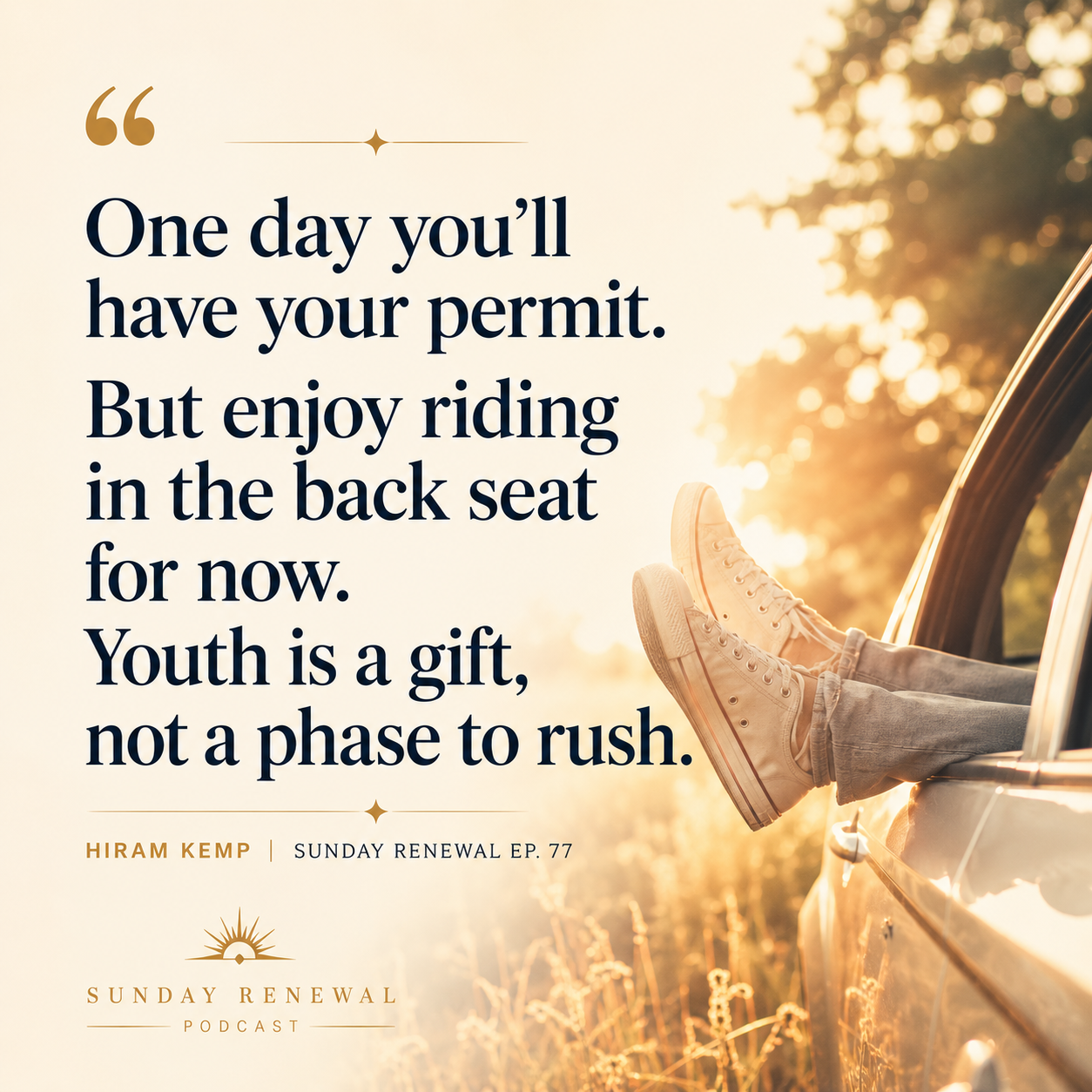
"One day you'll have your permit, but enjoy riding in the back seat for now."
One day, they'll have all the bills, all the responsibility, all the decisions. For now: enjoy. Give them permission to enjoy their graduation, their freshman year, their friendships, and their play.
The Bible doesn't commission us to remain immature forever. But it does say: childhood and youth are a gift. Don't fast-forward through it.
Pattern 7: Receive Life as a Gift
Ecclesiastes 2:24–25
"There is nothing better for a person than that he should eat and drink and find enjoyment in his toil. This also, I saw, is from the hand of God. For apart from him, who can eat or who can have enjoyment?" — Ecclesiastes 2:24–25
This is the thread that runs through every pattern before it. This is the point beneath the point.
Life is not yours by right. It is yours by gift.
The work, the meal, the relationships, the seasons, the youth, none of it was owed to you. All of it was freely given. And the moment you begin receiving it as a gift from the hand of God, something shifts.
Hiram tells the story of C.S. Lewis asking a young boy what he thought about God. The boy answered: "I think God is the kind of person who looks out into the world to see if anyone is having fun, so he can stop it."
That image, God as the cosmic killjoy, is exactly what drives people toward both extremes. Toward hedonism or hiding. Toward chasing everything or retreating from everything.
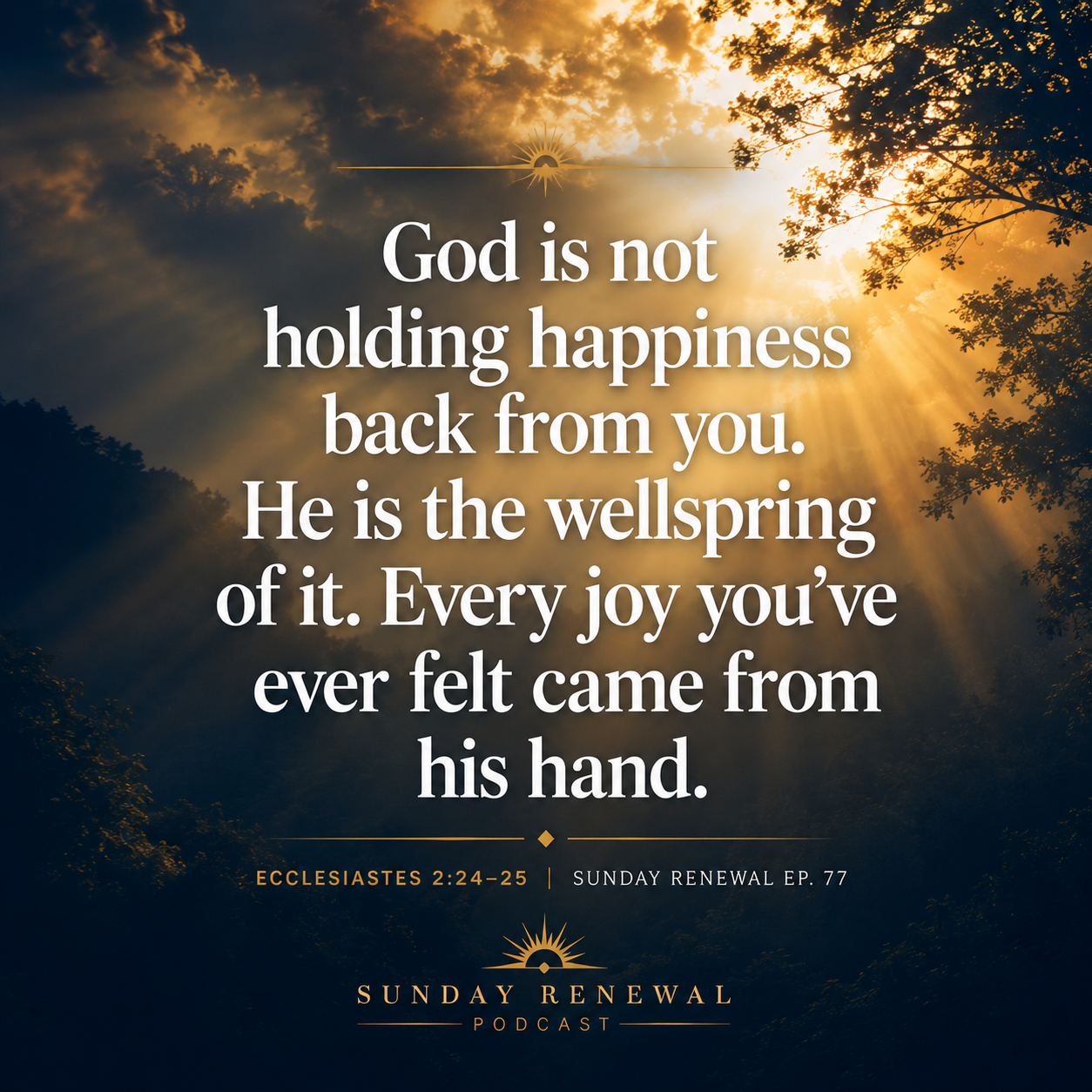
Solomon's answer is the opposite: God is the source of every joy you have ever felt. Every good and perfect gift comes from above (James 1:17). He is not holding happiness back from you; he is the wellspring of it.
"In his light we see light." (Psalm 36:9)
When you start coming at life as a steward rather than an owner, when you stop expecting all circumstances, weather, traffic, and people to always go your way, you will stop being constantly irritated by a world that doesn't perform on command.
And you'll start tasting something better: gratitude. Presence. Joy that doesn't depend on outcomes.
The Conclusion That Changes Everything
Near the end of Ecclesiastes, Solomon drops his final verdict:
"Fear God and keep his commandments, for this is the whole duty of man." — Ecclesiastes 12:13
Everything Hiram has preached in this message lives under that umbrella. The seven patterns aren't a self-help list. They're not a strategy for productivity or happiness hacking. They are the natural outflow of a person who has properly oriented their life toward God.
When you get your relationship with God right, everything else becomes something you can enjoy properly.
You can work hard and love it. You can eat a meal and taste grace in it. You can accept the season you're in and find God faithful in it. You can invest in relationships and find the fullness of humanity in them. You can watch your children be young and not rush a single day of it.
You can receive your life, this short, passing, beautiful, broken life, as a gift from the hand of the only One who could give it.
And as Hiram closes:
"This world is not your home. But all the good in this world is thoroughly reminiscent of the world you're heading to. The only thing wrong with this world is sin. One day, when God deals with it, all will be made well. But the message from Ecclesiastes is...you don't have to wait until then to enjoy it."

Listen + Watch
🎧 Listen on Apple Podcasts, Spotify, Amazon Music — search Sunday Renewal Podcast 📺 Watch on YouTube: Episode 77 — How to Enjoy God's World, God's Way ft. Hiram Kemp 📖 Free 5-Day Devotional — Renaming Your Story: From Pain to Purpose to Legacy
About the Guest
Hiram Kemp is a preacher, teacher, and dear friend of Sunday Renewal host, Ernest Benjamin. His preaching is marked by deep biblical exposition, pastoral warmth, and rare clarity. We are grateful to have him share this message with the Sunday Renewal family.
About Sunday Renewal
Sunday Renewal is a weekly podcast and discipleship ecosystem designed to help you revive your faith, restore your hope, and discover the deep, unshakable peace that comes from walking daily with God.
New episodes every Sunday.
Everything under the Lordship of Christ.
Love This Content? Help Us Share More Hope & Faith! 💛
Join Me Weekly:
Subscribe to my blog for fresh devotionals that bring God’s Word to life, listen to the weekly podcast, or follow me: