- Jul 1
When Church Leaders Sin: What God Actually Commands (1 Timothy 5:20–21)
- Ernest H. Benjamin
When the Church Covers It Up, Who Does God Side With?
There is a moment that happens in churches all over the world, in denominations large and small, in congregations famous and unknown, and it almost never makes the announcement on Sunday morning.
A leader sins. The witnesses confirm it. The rumors are no longer rumors.
And instead of what God commands, the matter is buried. The leader is quietly moved, quietly retired, quietly recommended to another congregation. Quietly absorbed back into ministry somewhere else. The people who were harmed are quietly asked to keep it to themselves. The position is protected. The platform is preserved. The institution is shielded.
That is not Paul's vision. That is the opposite of what Paul is teaching and commanding.
The Apostle Paul knew this temptation was coming. He had planted churches, watched leaders stumble, and seen the profound damage that unaddressed sin in leadership could do to the body of Christ. So when he wrote to a young preacher named Timothy in Ephesus, a church wrestling with exactly these pressures, he did not soften the instructions. He gave one of the most courageous, weighty, and protective passages in the entire New Testament.
We are in 1 Timothy 5:19–21. And what Paul commands here is not optional, not cultural, and not up for institutional negotiation.
The Difference Between Stumbling and Persisting
Before Paul commands anything, he makes a distinction that changes everything.
"As for those who persist in sin, rebuke them in the presence of all." (1 Timothy 5:20)
The word Paul uses describes sin that is ongoing, continuing, present tense. Not a stumble. Not a moment of failure that led to repentance and restoration. He is describing the elder who knows what he is doing, has been confronted, and continues anyway.
This distinction is not a loophole. It is pastoral wisdom.
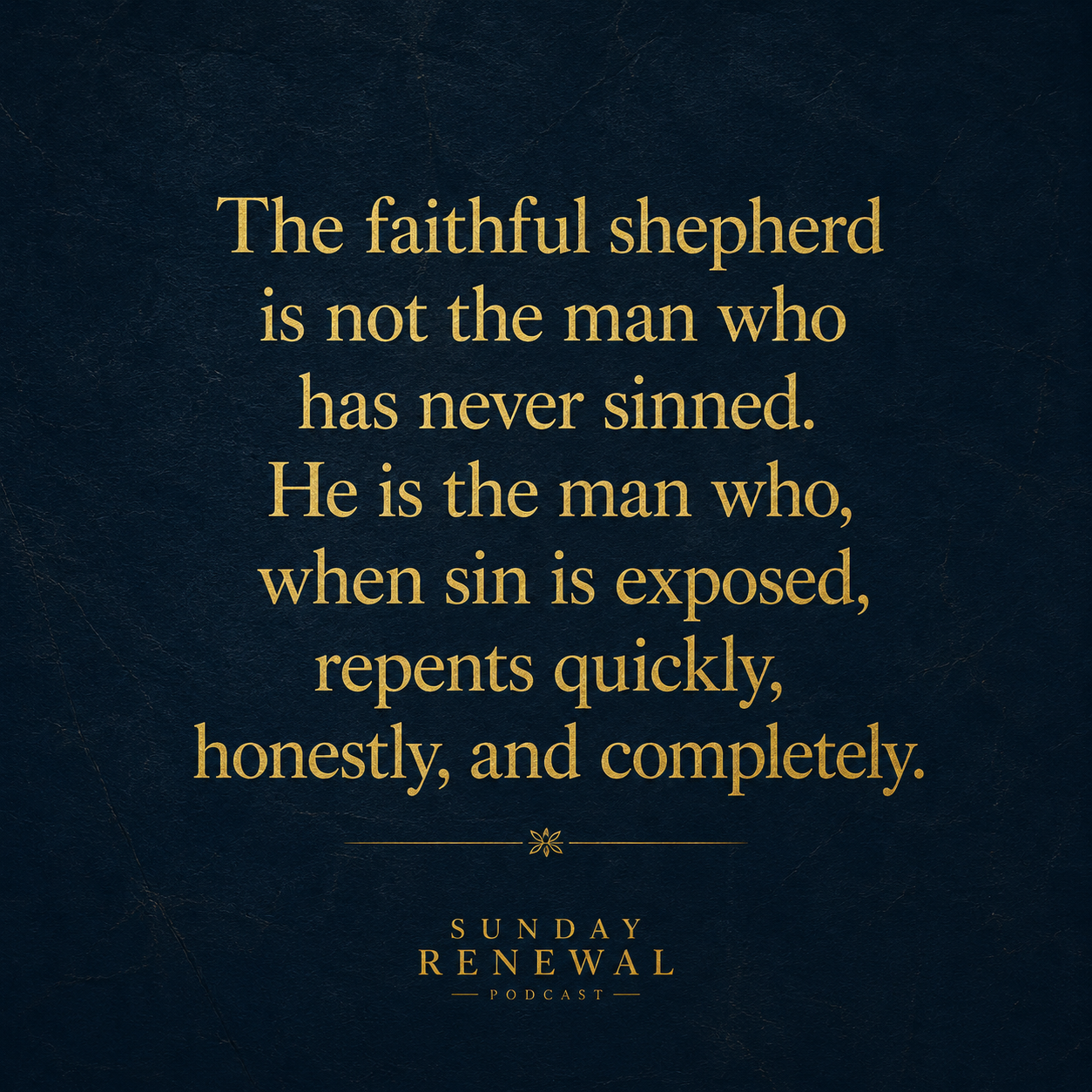
Every elder sins. Every preacher sins. Romans 3:23 does not carve out an exception for church office. If the standard for leadership were perfection, the list of qualified candidates throughout all of church history would be exactly zero. The faithful shepherd is not the man who has never sinned. He is the man who, when sin is exposed in his life, repents quickly, honestly, and completely.
The Bible has different words for these two postures. One the Scripture calls humility. The other it calls hardness of heart. And the difference between them is not whether sin has occurred; it is what the heart does when sin is exposed.
What Paul Commands When Sin Is Confirmed
When the investigation of verse 19 confirms continuing, unrepentant sin, Paul does not give Timothy a quiet option.
"Rebuke them in the presence of all, so that the rest may stand in fear." (v. 20)
Public. Visible. In front of the congregation.
Before we flinch at how that sounds, we need to understand what Paul says it is for. He is not commanding public rebuke so the guilty party can be humiliated. He is not creating a spectacle. He is producing something specific in the body: the fear of God.
The fear Paul describes is not the fear of being caught. It is not embarrassment. It is the holy, sober reverence that moves through a congregation when they see how seriously their God takes sin in His own house. The trembling recognition that leadership in the Church of Jesus Christ is not a position of immunity. It is a position of greater accountability before a holy God.
The reasoning is inescapably logical. Leadership influence is public. Teaching is public. The example is public. The damage that unaddressed sin does to a congregation is public. So the correction must be public too.
The Wounds This Text Is Speaking To
This is the moment where we have to be honest because this text is speaking directly into wounds that a generation of church people are still carrying.
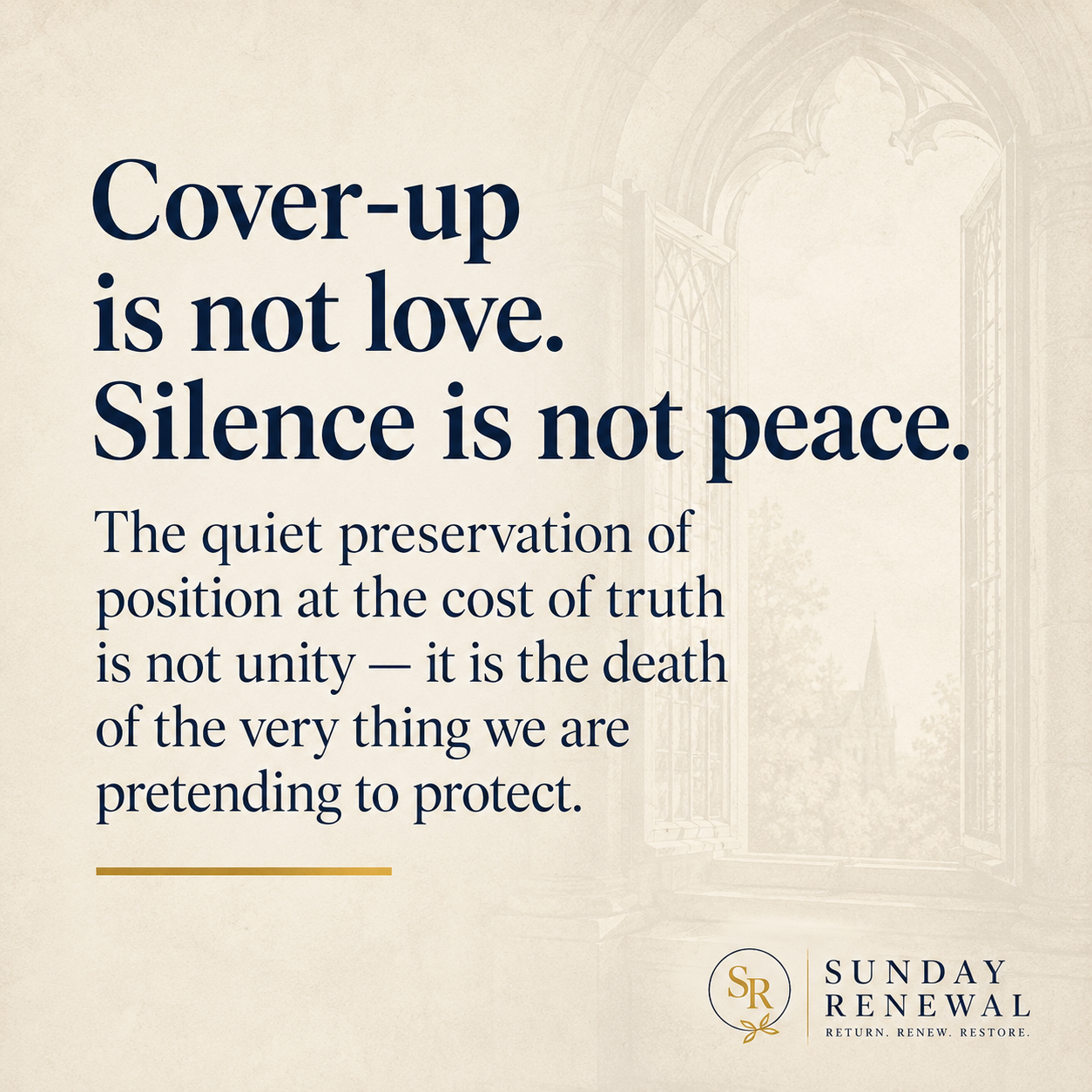
Many of you have watched it happen. A leader engaged in real, confirmed, undeniable sin. And instead of Paul's prescription, instead of the courageous, public accountability that God commands, the matter was buried. The position was protected. The platform was preserved. And the people who were harmed were silenced.
The leader was quietly moved. The witnesses who came forward were dismissed. And the congregation was left to piece together what happened from rumors, half-truths, and the visible absence of people who used to sit in the third row.
Hear this clearly: the God who inspired 1 Timothy 5:20 is not on the side of those patterns. The Christ whose authority stands behind every word of this apostolic instruction is not the Christ of cover-ups. The Lord who said "so that the rest may stand in fear" is not pleased when the rest are kept in the dark.
If the church you have known has been characterized by hidden sin, protected positions, and silenced witnesses, that church has not been obeying Christ. That church has been disobeying Christ. And the God who searches every heart, who judges every leader, who weighs every congregation, is not silent about that disobedience.
But Paul Rejects Every Extreme
Paul is not calling for spectacle. And he is not calling for vengeance.
He has already established in verse 19 that no charge against an elder can be received without two or three witnesses. Evidence before verdicts. Truth before conclusions. The church that rebukes too quickly, that publicizes before the charge is established, that turns accountability into a courtroom of constant suspicion, is not obeying Paul either.
And there is a third failure worth naming plainly, because some of you have been wounded by it as deeply as the others.
Some of you have watched an elder confess his sin. Watched him show evident repentance. Watched him weep before God and before the church, own what he did, name it as sin, and walk in genuine sorrow over it. And then, instead of receiving grace from the body of Christ, you watched that elder be publicly torn apart by people who were not satisfied with repentance. People who wanted humiliation. People who used the public weight of Paul's command as cover for personal vendettas and old scores being settled.
Paul's stated purpose is clear: so that the rest may stand in fear. Not so that the wounded may have vengeance. The goal is holy reverence, not the satisfaction of grievance. The repentant heart is not the target of verse 20. The unrepentant heart is.

The Watching Court
After commanding public accountability, Paul does something that changes the entire gravity of the room.
"In the presence of God and of Christ Jesus and of the elect angels, I charge you to keep these rules without prejudging, doing nothing from partiality." (1 Timothy 5:21)
This is courtroom language. And Paul has just expanded the audience.
When the church handles accusations against an elder, Timothy needs to understand that those decisions are not made only before the elders, or before the congregation, or before the watching community. Every decision is made in front of three audiences:
God the Father — who searches every heart, weighs every motive, and judges every act with perfect righteousness. He sees what every congregation cannot. He knows the truth even when the witnesses are confused, even when the accused is silent, even when the elders are conflicted.
Christ Jesus — the one to whom the church belongs. He purchased her with his own blood (Acts 20:28). He is the one John saw walking among his lampstands, eyes like flames of fire, evaluating every church by name. He has not stopped walking among his people.
The elect angels — the heavenly host observing the unfolding of God's purposes among His people. There is a heavenly courtroom, and it is watching.
There is no such thing as a private leadership decision in the Church of Jesus Christ. Every act, every choice, every silence, every defense...it all happens in the presence of God, Christ, and the heavenly host.
The Sin Paul Knew Would Come
Paul places this charge here because he knew exactly what would tempt Timothy. The same thing that tempts every leadership body that has to handle hard cases.
Favoritism.
Do nothing from partiality.
Favoritism is the most natural sin in any human leadership structure. We excuse the people we admire. We protect the people who benefit us. We overlook sin in people we love, people we serve under, people whose downfall would be costly to us personally. We extend grace generously to those in our circle and apply scrutiny harshly to those outside it.
Paul says: not in Christ's church.
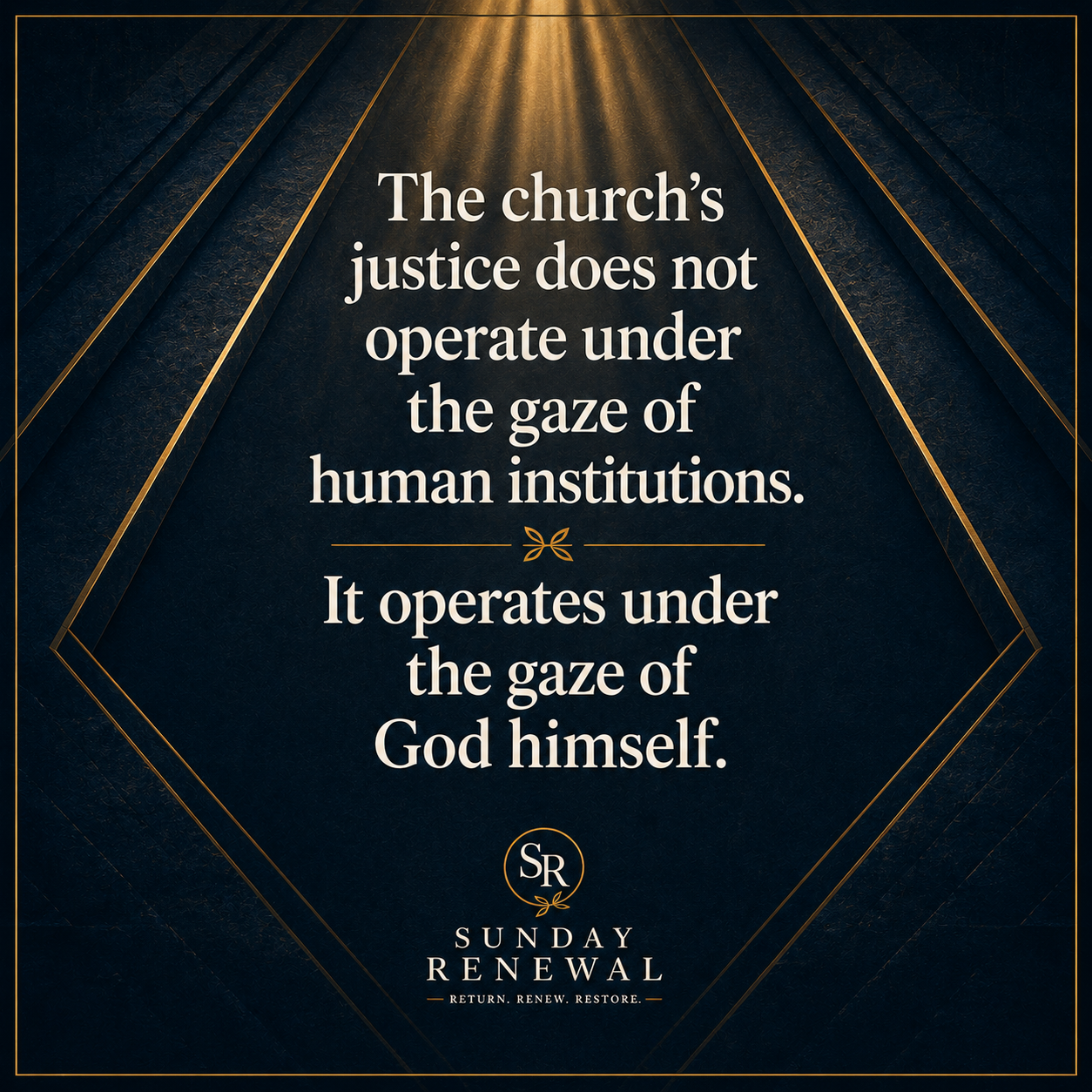
Human courts aspire to impartiality. They blindfold Lady Justice so she cannot see who is wealthy and who is poor, who is connected and who is unknown. That is a noble human image. But Paul calls the church to something infinitely higher because the church's justice does not operate under the gaze of human institutions. It operates under the gaze of God himself.
If a human judge can be impartial because human institutions are watching, how much more should the church be impartial because the Lord of heaven is watching?
The Only Leader Who Needed No Rebuke
Paul's three-fold invocation — God, Christ Jesus, the elect angels — points Timothy upward toward something he cannot miss.
Every standard Paul has held up in this passage is a standard no human leader has ever perfectly kept. Every elder has failed in some measure. Every preacher has fallen short. Every faithful shepherd in the history of the church has at some point been the one needing rebuke rather than giving it.
Except one.
There is one leader in all of human history who never abused authority. One leader who never required rebuke. One leader who never showed partiality, never excused his friends, never punished the inconvenient, never traded truth for politics, never hid behind position.
His name is Jesus the Christ.
He is the one Peter said committed no sin, neither was deceit found in his mouth (1 Peter 2:22). He is the one who could stand before his enemies and ask, "Which one of you convicts me of sin?" and receive no answer (John 8:46). He was the only leader who deserved nothing but honor.
And yet, this is the staggering truth at the heart of the gospel: He took the judgment that every other leader deserved. He took the verdict that every congregation in history has earned. He took the rebuke that every persistent sinner has refused to repent of. He bore it willingly, deliberately, sacrificially, in his own body on the cross.
The only leader who never required rebuke received the judgment we all required.
That is the Christ before whom every leadership decision in His church is ultimately weighed. And that is the Christ who still extends grace to every leader willing to step out of the darkness and into the light.
The Call That Remains
Paul closes this passage with three commands that form the spine of everything he has said:
Truth — investigate carefully. Do not believe what cannot be established.
Courage — when sin is confirmed and unrepented, do not look away. Confront visibly and faithfully.
Impartiality — do all of this under the watchful gaze of God, Christ, and the heavenly host. No favoritism. No prejudgment. No preference for the connected or scrutiny reserved only for the unliked.
And underneath all of it sits the truth this series keeps returning to: Christ protects his church when his people steward leadership according to his design.
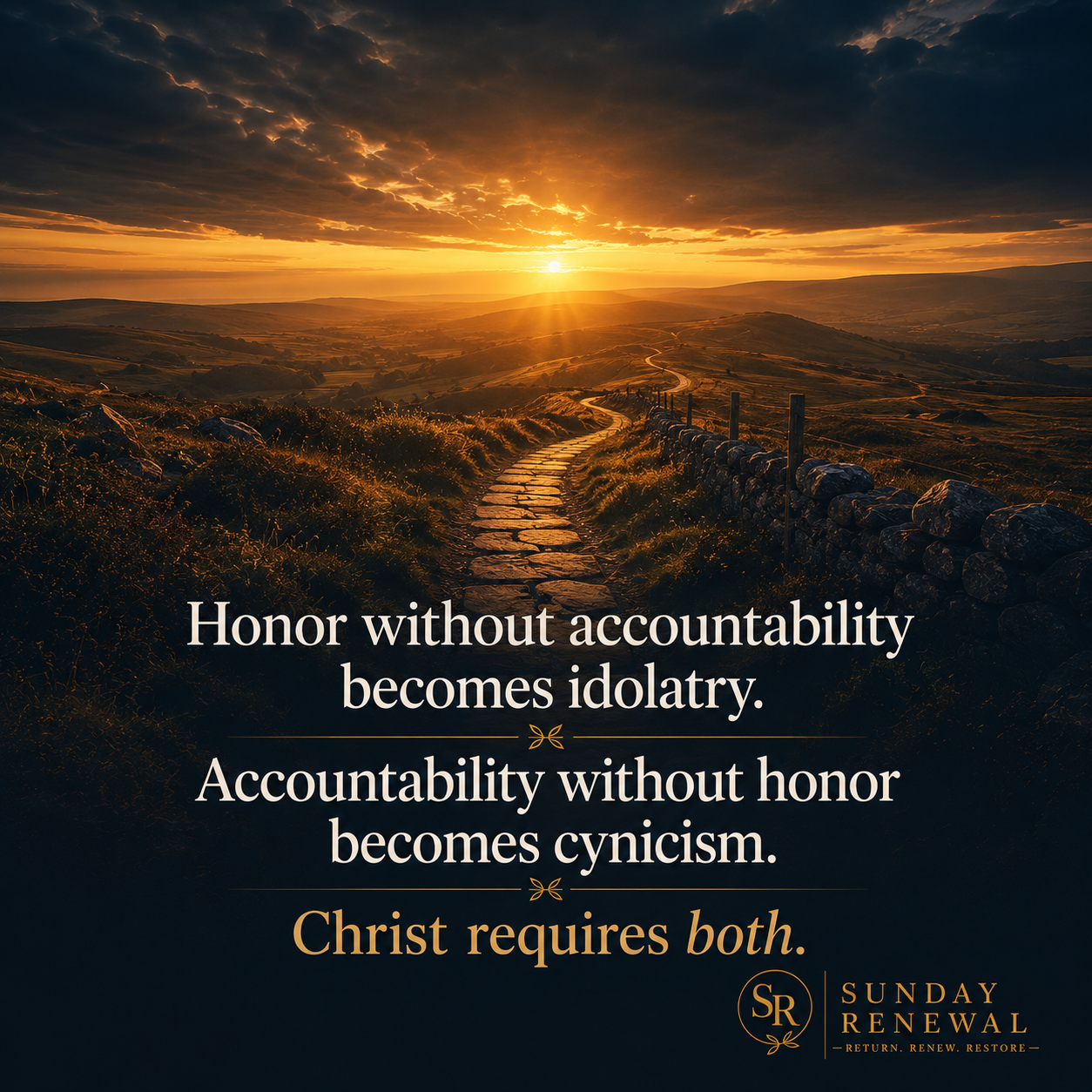
Honor without accountability becomes idolatry of leaders. Accountability without honor becomes cynicism toward leaders. Christ requires both because both are how He protects His church.
The church that gets this right will not be the one that never experiences leadership failure. It will be the one that handles failure with truth, courage, and the holy fear of a God who is watching and who will not be mocked.
This post is part of the Sunday Renewal series: The Stewardship of Church Leadership.
Ernest Benjamin is the host of Sunday Renewal, a podcast and discipleship ministry helping spiritually exhausted believers reconnect with God through biblical truth, emotional honesty, and gospel-centered transformation. New episodes release every Sunday. Subscribe on Apple Podcasts, Spotify, or YouTube.
Before you go, if you're in a season of spiritual exhaustion, discouragement, or searching for a fresh start, the free 5-day audio devotional Renaming Your Story: From Pain to Purpose to Legacy was created for exactly where you are.
Love This Content? Help Us Share More Hope & Faith! 💛
Join Me Weekly:
Subscribe to my blog for fresh devotionals that bring God’s Word to life, listen to the weekly podcast, or follow me: